

You unroll it and know that this moment is just for you. Your personal space for breathing, movement, and peace. But before that moment arrives, a decision awaits you: which yoga mat to choose so it becomes your best support?
At JOYINME, we perfectly understand this dilemma. As a Polish brand creating sports accessories for women like you, we believe that a mat is more than just equipment. It is a combination of technology, which cares for your safety and grip, with a unique design that feeds the senses and motivates regular practice. That is precisely why we design our patterns to be eye-catching and inspire you to step onto the mat.
We will guide you step by step through the most important criteria. We will answer the questions that are probably already rattling around in your head: what mat thickness will be optimal? How do the various types of mats differ? And finally — how to select a yoga mat so that it is well-suited to your style of practice and... to you.

Mat dimensions – how to choose the right size for yourself?
The most popular and at the same time most classic mat model has dimensions of 180x60 cm. However, a product considered universal is not always able to meet all our needs. Here are a few tips that will allow you to match the type of yoga mat to your body and specific practice.
Length and width – how to adjust them?
It is generally assumed that the length of the mat should be at least 10 cm more than your height; however, the most important thing is to be able to fit on it during Savasana. If you only have 5 cm of leeway, this value can be considered acceptable. In reality, mat size is a very individual matter and depends directly on your needs.
For group classes, it is worth choosing slightly wider models than standard mats due to the need to conform to often limited exercise space. Also, remember the practical aspects related to storing and transporting the mat. Accessories that are too wide, e.g., 80 cm, are quite bulky and significantly limit your choice of carrying bag.
Mat thickness – an important balance between cushioning and stability
The thickness of a yoga mat is one of the most important criteria due to its direct impact on the quality of the practice itself. There are many variants available on the market, from 1 mm to 8 mm. The general rule is that the greater the thickness, the better the joint cushioning.
Is a thick mat always the best and most practical solution? Not necessarily! Here is some basic information about the most popular variants:
- thin mats (1-3 mm) – extremely flexible, guarantee non-slip properties, provide a sense of stability, and are easy to transport to classes;
- medium mats (4-5 mm) – softer than thin models, better cushioning and solid insulation from the floor, which makes them great for intense practice and dynamic types of yoga;
- thick mats (more than 6 mm) – good for people who need more support for their joints; although heavy, they are worth considering, for example, in case of knee problems.


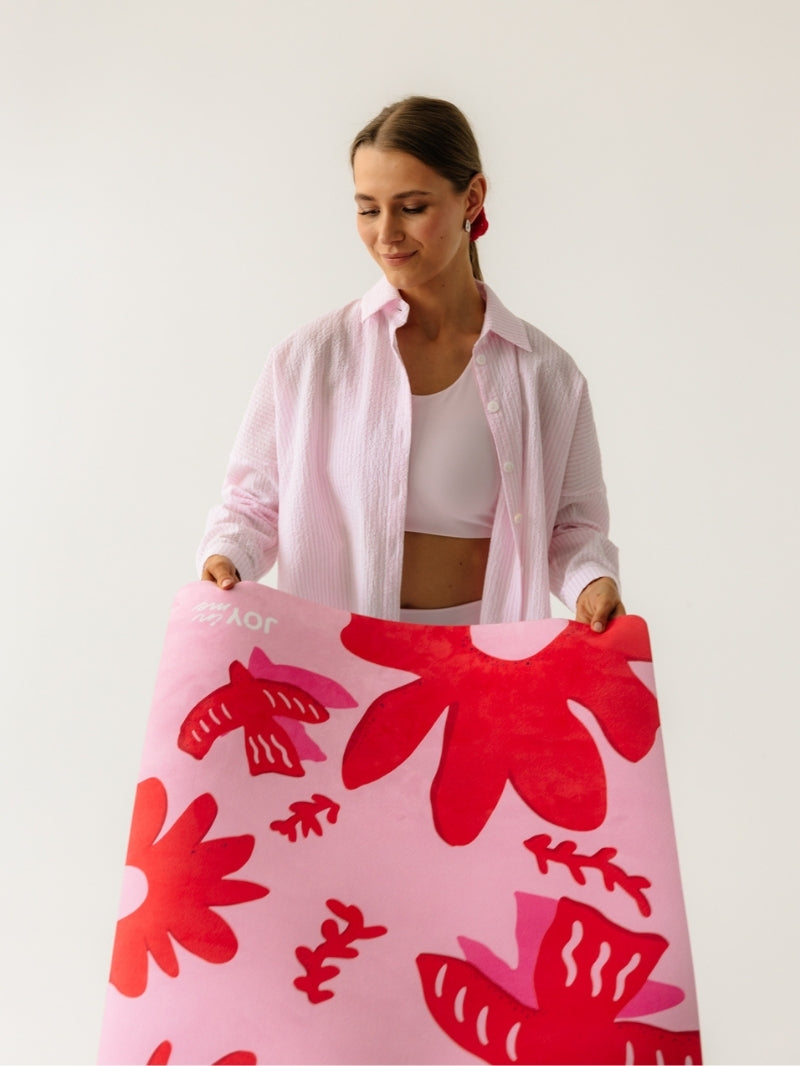


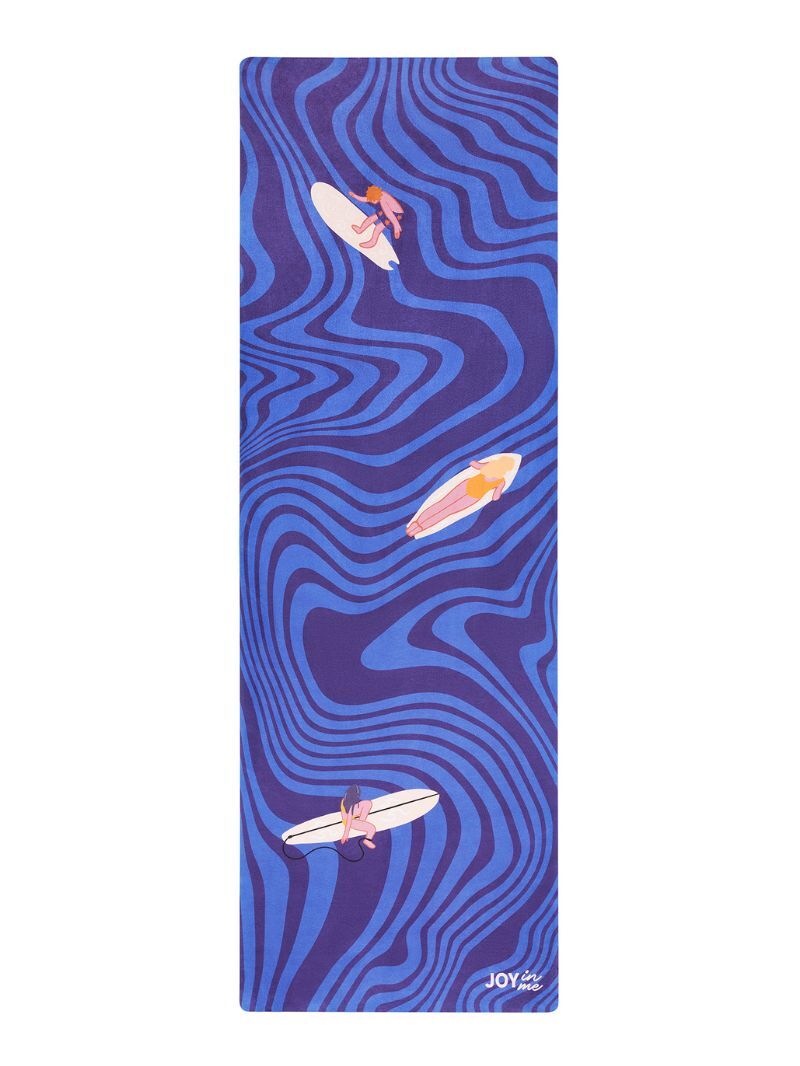



If you travel a lot or take part in off-site workshops, opt for a travel mat, which, despite standard dimensions, is only 1 mm thick, allowing it to be folded into a square.

Material types – why is it worth choosing natural ones?
The basic choice you will have to face is the material. At this point, difficulties will likely arise, as there are many options available on the market. PVC, PU-polyurethane, natural cork, TPE, microfiber, natural rubber, or jute – each of these materials is distinguished by specific features and positive properties.
What should you pay attention to in order to get a durable and non-slip product? Check out which material is worth choosing!
Natural vs. synthetic mats – a comparison of properties
Choosing the perfect yoga mat also requires proper consideration of the material used to make it. You can easily find models made of natural as well as synthetic materials on the market. They differ in terms of properties, durability, and price. The most popular materials include:
- rubber – durable, eco-friendly, waterproof, and easy to care for; provides excellent stabilization;
- jute – a natural, slightly rough material, usually used in combination with another material, such as rubber or PVC foam;
- cork – lightweight, comfortable for both beginners and more advanced practitioners; often combined with rubber for additional grip;
- PVC – stable and cushioned, but due to its hardness, it requires a break-in period; you should check whether this type of mat has an appropriate safety certificate, guaranteeing that it does not contain any harmful substances.
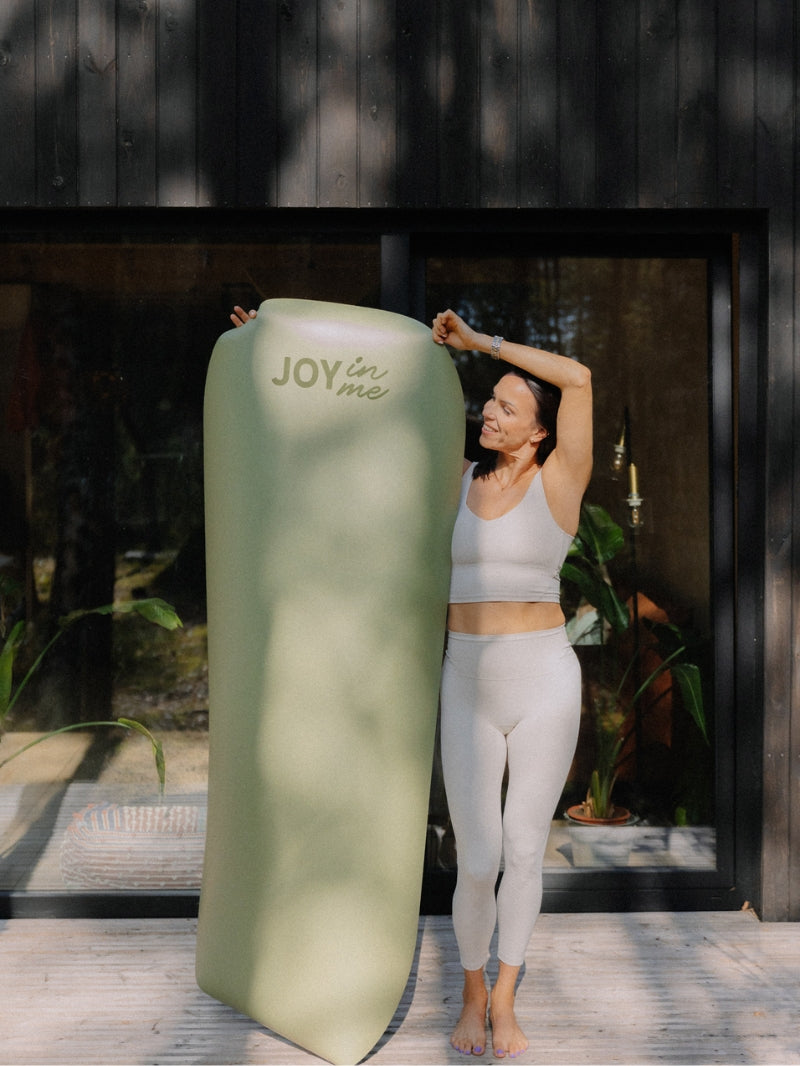
Natural materials do not trap bacteria or dust, making them suitable for allergy sufferers as well. Definitely worth noting is the exercise mat created from natural, 100% biodegradable rubber without the addition of lead, cadmium, latex, or silicones. The top layer is covered with microfiber, which makes the product extremely pleasant to the touch and perfectly absorbs moisture and sweat.
Grip and surface texture – how do they affect exercises?
It is important to choose a mat based on individual preferences and intended use – after all, your safety depends on it. Good grip ensures stability while performing asanas. This is a very important aspect, primarily in dynamic styles of yoga where the emphasis is on maintaining balance and precision.


The texture of the mat, whether artificial or natural, affects comfort of use. For example, jute models offer roughness that is helpful in maintaining positions, while PVC models are usually softer and may provide a better feel for the floor.
For people exercising at home, where conditions can vary, a universal mat with moderate texture may be the best choice, offering a compromise between grip and personal comfort.

Choosing a yoga mat vs. type of exercise – which one to pick?
The choice of the right mat depends primarily on the form of physical activity you engage in. Every type of yoga has its specific requirements regarding stability, grip, and comfort of use, much like Pilates or fitness.
Yoga – from classic to hot yoga
When practicing classic yoga, such as Hatha or Vinyasa, it is good to choose mats with a moderate texture that will provide adequate grip but at the same time be gentle on the skin. Rubber mats with a smooth surface can be perfect for static asanas that require holding positions for longer.
However, if you practice more dynamic styles, such as Ashtanga or Power Yoga, it is worth considering mats with a rough surface. Models enriched with jute fibers provide better stability during quick position changes.
For hot yoga, meanwhile, mats with an additional absorbent layer are ideal, preventing slipping on a sweaty surface.
Pilates and reformer exercises – precision and support
Pilates and reformer exercises require mats with slightly different parameters than classic yoga. A model that is too soft may hinder precise execution of exercises, while one that is too hard will not provide adequate joint support. It is worth choosing dedicated solutions, such as mats designed specifically for the reformer, which are universal in terms of size and fit most machines.





Fitness and intense workouts – durability and cushioning
For intense workouts, regardless of their type, you need solid support and cushioning. In such cases, mats with a thickness of at least 6 mm will be ideal. They will protect your joints from excessive strain during dynamic movements.
How to choose a mat suited to your level?
Which yoga mat for beginners? At the beginning of the journey, the most important thing is to build a solid foundation and a sense of safety. You want to focus on learning proper technique and breathing, not on fighting to keep your balance on a slippery or too thin surface.
That is why mats that offer good cushioning are often recommended for starters, protecting knees and wrists that are just getting used to new positions. An optimal choice will be a mat with a thickness of about 3-5 mm. It will provide a compromise between comfort and stable contact with the floor, which is necessary for finding your balance. Our natural rubber yoga mats fit these needs perfectly, giving secure, immobile support.

And what if you practice more, more intensely, or while traveling?
As your practice develops, new needs may arise.
-
When you travel frequently: If your mat regularly travels with you to the studio, to workshops, or on vacation, its weight becomes a significant factor. Consider a lighter model then, preferably under 2.5 kg. Our microfiber mats are a perfect example – they combine lightness with beautiful design, being an ideal travel companion.
-
When your practice is versatile: Do you practice dynamic yoga, but also like Pilates or functional training? You need a mat that will perform well under all conditions. At JOYINME, we focus on versatility and durability. Our professional rubber mats are designed to withstand years of intense practice, providing joint protection and constant grip regardless of the type of exercise.
Remember that a mat is not just equipment – it is an investment in your comfort, safety, and joy of practice. The best yoga mat is one that supports you here and now, but is also ready for your further development. Trust our experience and choose a mat from a brand that knows its stuff :)
Photographer Photopeople / Model Kasia Tochman-Filip


